
Listen to “#492 The Manufactured Reality” on Spreaker.
Are we discovering reality through the information we consume—or are we being conditioned to accept a version of reality that has been manufactured for us?
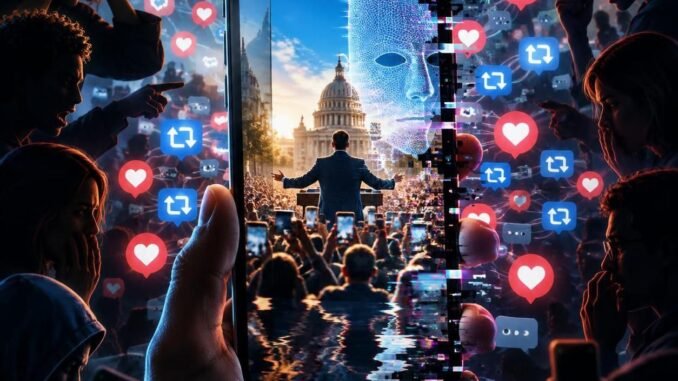
Social Media has turned into a platform hosting deepfake information; manipulated photos, altered video clips, and memes that say something quoted that wasn’t truly said by the person.
The algorithms steer our emotions to form an opinion and gain a perception that has been manipulated. Even when the truth of the fraud has been revealed, its too late. The mind already processed it and made a decision.
What if evidence is no longer evidence?
We are given videos on social media to assume they are authentic. Only to find they have been fabricated, altered, edited, even produced into something the public figure had not said. We already sent it on fire through viral sharing to find it was fake.
But now it is too late. Others received it , shared it, and now believe it, even when you send out a public statement that you jumped the gun.
Deepfakes have become a problem in today’s society.
The Algorithms don’t show you the world, just a version of it.
Social media feeds are not neutral windows into reality. They are curated environments.
The content we see is influenced by:
- What we watch.
- What we click.
- What we comment on.
- What we share.
- What captures our attention.
- What the platform predicts will keep us engaged.
The important distinction is between what is popular and what is being made visible. Sometimes the items put before you are not what is important, or even what’s true, but what others are sharing that make it more popular in the consensus.
Grabbing you with an emotional hook
Human psychology is at play. We tend to react even before we fact check. This leads to emotional dominance over reality. Sometimes a fear has already crept in to determine our emotional response. Even after we went back to verify.
The emotional response comes before the fact-check
Consider the difference between two headlines:
“New Government Policy Announced”
“Government Officials Just Betrayed the American People”
The second headline is designed to provoke a reaction.
Now imagine the second headline is attached to a fabricated video showing officials admitting to something outrageous.
The viewer may experience anger, fear, disgust, or a sense of vindication before ever considering whether the material is authentic.
Certain podcasters will hit you with headlines such as
You’ll never guess what they will do to you soon.
Or something like,
You won’t believe what the government is doing next.
I call it clickbait. We all use a certain measure of it when we post, BUT some of these hyped by the content creator to stimulate emotions and get you to click out of curiosity or fear.
Deepfakes: The Manufacture of Convincing Evidence
Now with technology and AI ability people can make celebrities and public officials say anything they want to make a point. Even alter their words and say what they didn’t.
This is a problem. When some news is fabricated and saturated embedded within truth, the truth now gets cloudy and the defining lines gets muddied. Now that we have fake news along with truth, we don’t know what to believe. Most of the public social media audience will not do the diligence of research themselves. They will rely on the content creator to feed it to them. Sometimes with the opinion of the creator that is merely that – an opinion.
Now with the algorithms dictating visibility, whatever gets more likes and views become the ones that push forward even if it is fake.
War of Perception
Now instead of a war of truth, we have a war of perception. How we view a thing becomes its reality, even if the view is hyped, exaggerated, even fabricated.
A video appears.
It looks real.
It confirms what you already believe.
You feel compelled to share it.
But what if the video is fabricated? And what if the next video is authentic, but the person involved claims it is fake?
A war of reality enters. Manufactured reality.